

Welcome to Peak Point PT – Same Team, Same Services, and Same Location of First Class Physical Therapy (NJ). We're excited to introduce our new name! Visit us today for the high-quality care you've always relied on.
Physical Therapy After Knee Surgery For Total Mobility
Recovering from knee surgery is a journey that requires more than just time; it requires a strategic, expert-led recovery plan. Whether you have undergone a Total Knee Replacement (TKR), ACL reconstruction, or arthroscopic repair, the success of your procedure depends heavily on what happens next. In this post, you will learn about physical therapy after knee surgery for total mobility.
At Peak Point Physical Therapy, we specialize in physical therapy after knee surgery, helping patients in Passaic and the surrounding NJ areas regain their strength, stability, and confidence. Our mission is simple: to move you from the operating table back to the activities you love.
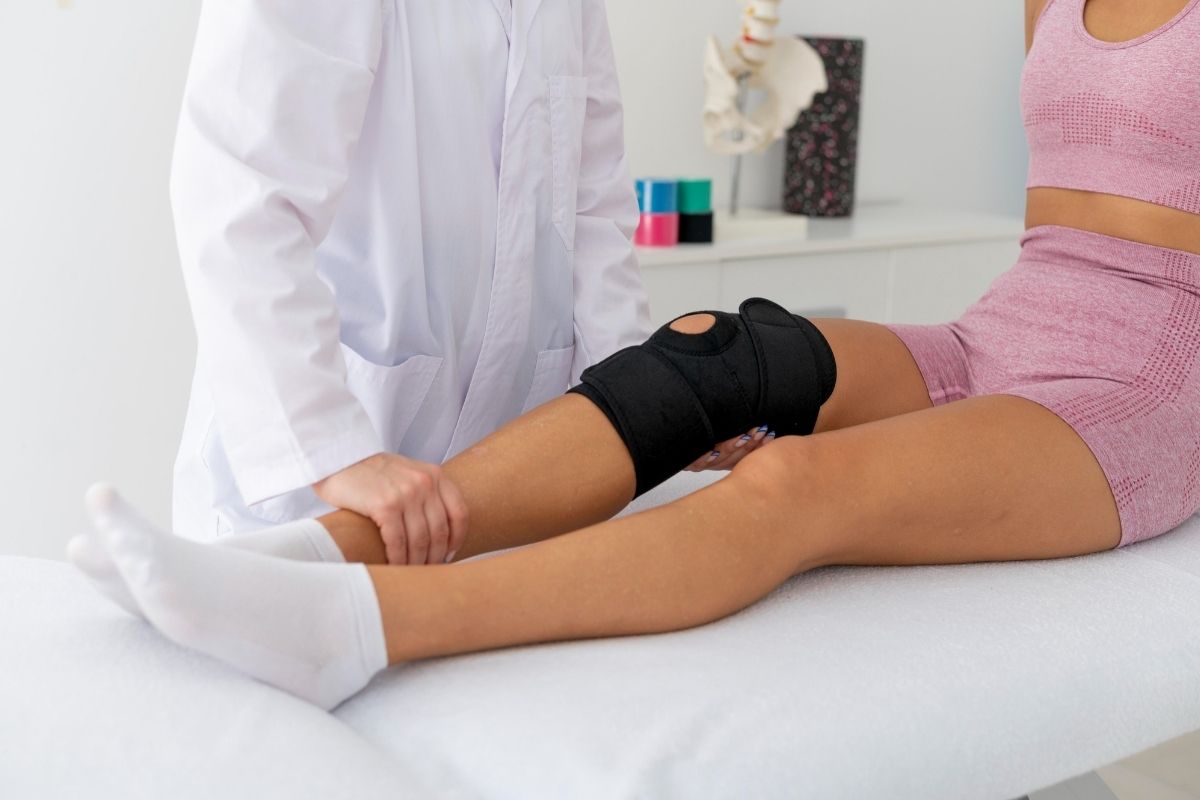
The Critical Role of Physical Therapy After Knee Surgery
Many patients believe that once the surgeon “fixes” the joint, the work is done. However, clinical research from institutions like Jag-PT and Kailash Healthcare emphasizes that the surgery creates the potential for mobility, but physical therapy actualizes it.
Without professional physical rehabilitation post knee surgery, patients often face:
- Arthrofibrosis: Excessive scar tissue buildup that “locks” the joint.
- Muscle Atrophy: Rapid weakening of the quadriceps and hamstrings.
- Gait Compensations: Developing a limp that leads to hip or back pain.
- Chronic Stiffness: Permanent loss of the ability to fully straighten or bend the leg.
Phases of Recovery: Your Post-Op Timeline
Every recovery is unique, but at Peak Point Physical Therapy, we follow evidence-based milestones to ensure you are progressing safely.
Phase 1: The Protection Phase (Weeks 1–2)
Immediately following surgery, the focus is on pain management and basic mobility. Our therapists work with you to:
Reduce surgical swelling through manual lymphatic drainage and compression.
Achieve “terminal knee extension” (getting the leg completely straight).
Begin gentle “quad sets” to wake up the muscles.
Ensure safe navigation of stairs and transfers from bed to chair.
Phase 2: Range of Motion & Weight Bearing (Weeks 3–6)
This is often the most vital stage of pt post knee surgery. We focus on:
Increasing your flexion (bending) through passive and active-assisted stretching.
Transitioning from a walker or crutches to a cane, and eventually independent walking.
Stationary cycling to improve joint lubrication and cardiovascular health.
Phase 3: Strengthening & Functional Balance (Weeks 7–12+)
Once the joint is stable and the incision is fully healed, we shift toward physical rehabilitation after knee replacement that mimics daily life:
Step-ups and lunges to build functional power.
Proprioception training (balance) to prevent future falls.
Sports-specific drills if you are returning to an active hobby like golf, tennis, or hiking.
Insurance
Peak Point Physical Therapy accepts the following insurance.












We accept the above insurance providers for physical therapy. If your plan is not listed, please call 973-657-6334 on to verify if your insurance plan is accepted or fill in the below form and we will get back to you soon.
Why Choose Peak Point for Post Surgery Physical Therapy?
Searching for “physical therapy after knee surgery Passaic” brings up many options, but Peak Point stands out through our individualized approach. We don’t just give you a sheet of exercises; we provide hands-on care.
Manual Therapy Expertise
Unlike “big-box” clinics, our therapists prioritize manual techniques. We use soft-tissue mobilization to break up surgical adhesions and joint oscillations to reduce stiffness. This hands-on touch is often the difference between a “good” recovery and a “great” one.
Personalized “Pre-Hab” and “Post-Hab”
As noted by ProFysio NJ, physical therapy is most effective when it is continuous. If you haven’t had surgery yet, we offer “Pre-hab” to strengthen the muscles around the knee before the procedure, which significantly accelerates recovery times afterward.
Local Access for Passaic Residents
Recovering from surgery is exhausting. You shouldn’t have to drive an hour for treatment. Our Passaic facility is conveniently located to serve the entire Passaic County, and patients from nearby areas like Clifton, Wallington, Nutley, Rutherford, etc.
Don’t Wait for The Physical Therapy Treatment You Need
Let us help you get back on your feet, strong and happy.
Common Challenges & How We Solve Them
It is normal to feel frustrated during recovery. Here is how we handle the common roadblocks:
“The Wall”: Many patients hit a plateau in their range of motion around week 4. We use advanced stretching techniques and neuromuscular electrical stimulation (NMES) to break through this barrier.
Night Pain: Knee surgery pain is often worse at night. We educate you on positioning and cryotherapy (ice) schedules to help you get the rest you need to heal.
Fear of Movement: It’s natural to be afraid of “breaking” the new joint. Our therapists provide a safe, supervised environment where you can push your limits without risk.
Reviews
Read What Our Patients Are Saying
Where are we
Locate us on Google Maps
F.A.Q.
FAQs – Physical Therapy After Knee Surgery For Total Mobility
How soon should I start physical therapy after knee surgery?
Most surgeons recommend starting pt post knee surgery within 24 to 72 hours of the procedure. Early movement is essential to prevent blood clots and ensure the joint doesn’t “freeze” in place.
Is physical therapy painful after a knee replacement?
While some discomfort is expected as we work to regain range of motion, we never push you to a level of “bad” pain. We use ice, manual therapy, and gentle movements to keep your pain levels manageable while still making progress.
How long is physical therapy after TKR?
Typically, patients attend formal physical therapy sessions 2–3 times a week for 8 to 12 weeks. However, we provide you with a lifetime “home maintenance” plan to ensure your new knee remains strong for decades.
Can I drive while doing physical rehabilitation post knee surgery?
This depends on which leg was operated on and the type of medication you are taking. Generally, if it was your right leg, you may need 4–6 weeks before you can safely react and brake. Your therapist will perform “functional testing” to help you and your doctor make this decision.
What should I bring to my first post-op appointment?
Please bring your surgical discharge papers, a list of any medications you are taking, and wear loose-fitting shorts that allow your therapist to easily examine the knee joint and incision.